KNOWLEDGE
Economics for kids, explained
How to teach kids about money, prices and taxes – no textbook, no lecturing.

Why financial literacy starts in everyday life
Kids encounter economics long before anyone explains the word: with pocket money, at the supermarket checkout, in advertising, at the first lemonade stand. Every day they experience that things cost money – but rarely why.
At school, economics often comes up late or not at all. Yet here as everywhere: what kids understand early gives them confidence later. Those who know income, costs and profit at ten question their first subscription trap at fourteen – and make more confident money decisions at twenty.
The good news: financial literacy does not need lessons. It needs everyday moments – and someone who uses them.
Five everyday moments in which kids learn economics
1. Pocket money. The first own budget. Those who have to budget learn priorities – and that “gone is gone” is not a punishment but an experience.
2. Shopping. Why does the brand muesli cost twice as much? Comparing prices is the simplest economics exercise in the world – and turns kids into alert consumers.
3. The sales stand. Lemonade, flea market, bake sale: those who sell understand income, costs and profit faster than through any explanation. And at some point an adult asks: “Do you actually pay taxes?”
4. Advertising. “Why do they want me to buy this?” A single question turns consumers into little critics.
5. The savings jar. Saving means being able to wait. Those who save for a goal learn patience – and feel how good achievement feels.
Eight terms kids aged 10+ can understand
Income: all the money that comes in – for example from sold lemonade.
Expenses: all the money that goes out – lemons, sugar, cups.
Profit: what is left when you subtract expenses from income.
Taxes: the share everyone gives to the state – it pays for schools, roads and playgrounds.
Gross and net: what is written on paper – and what really arrives in the account.
Inflation: when the same money can buy less over time.
Interest: the price of borrowed money – or the reward for saving.
Contract: a promise that counts – which is why you always read the fine print.
Why stories explain better than memorised rules
Kids do not remember definitions – they remember characters, situations and feelings. That is exactly why the Business Guinea Pigs tell economics as everyday adventures: two kids experience something they do not understand, and four guinea pigs explain it – each from its own perspective, bilingual in German and English.

Rocky
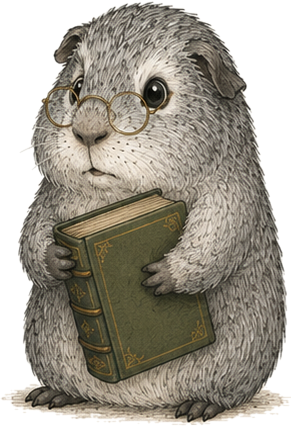
Mr. Grey
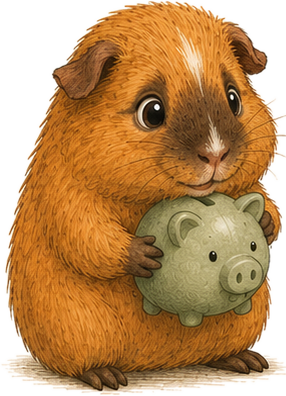
Toffy

Mojito
We believe learning should be fun. Because nobody remembers what bores them.
Curious now?